
The Ethiopian Eunuch
Celebrating Queerness in the Bible

Gender is a complex topic. Biological sex refers to the characteristics of our physical bodies but culture often ignores the wide diversity of nature and tries to demand that everyone’s body fall into a male/female binary. We use male/female labels to keep people in their assigned place, which allows patriarchy to flourish, putting the male above the female. Of course, we also have a basic human need to analyze and classify to try to bring order to chaos. We invent boxes for people and things so we can create the illusion that the world is neat and orderly and therefore easily understood and controlled, which gives us a sense of security.
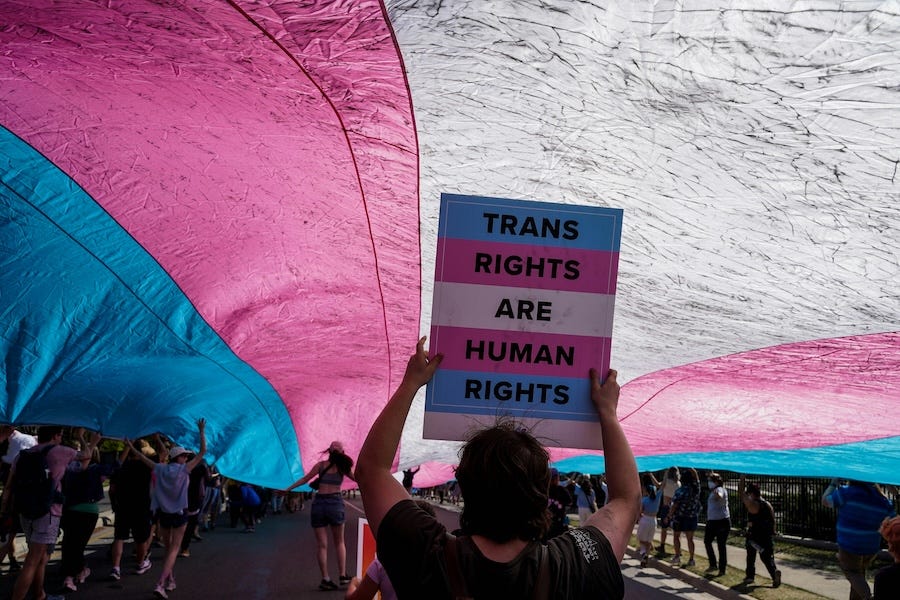
On top of the male/female boxes, our culture then constructs this thing we call gender, which doesn’t refer to physical characteristics so much as the rules and expectations about how men and women should look, talk, and act. However, binaries are rarely actually binaries. They’re spectrums with a wide range of in-between. So, what about people who don’t fit, for whom living authentically means defying culture’s heteronormative, male/female boxes? The effeminate man, the butch woman, transgender people, non-binary people, etc. People who are often ostracized and marginalized precisely because they don’t fit the boxes.
In the Bible we find passages that reinforce male/female gender boxes, but we also find text that challenges them. For example, in the gospels of Mark and Luke, Jesus tells two of his disciples to go into the city and find a man carrying a jar of water.1 There were probably many women carrying water jugs because in Jesus’ day it was considered woman’s work. A man carrying water would stand out because he was not the norm. He was defying his assigned gender box and yet this character is not criticized but simply mentioned as if it were a usual thing to see. We also have characters like Deborah in the book of Judges, who was a woman but also a judge, prophet, and military leader, all roles typically assigned to the male box in the Bible.2
We might also find inspiration in Joseph, another gender-bending story in the Hebrew Bible,3 told in popular culture in the musical “Joseph and the Amazing Technicolor Dreamcoat.” We know Joseph as the boy with the so-called coat of many colors, but the exact meaning of the Hebrew describing the coat are uncertain. Interestingly, the only other place in the Bible where a garment is described in the same way is in the story of the rape of Tamar, where the garment is said to be worn by the virgin daughters of kings. In other words, Joseph is shown favor by his father through a gift of what would have been understood as a fancy woman’s robe. Then, instead of working with his brothers in the fields, Joseph is taken away from so-called manly work and made “a kind of domestic overseer.” His brothers, as the story goes, strip Joseph of the robe and sell him into slavery after their father Jacob sends Joseph to check up on them. It seems they might have acted not only out of jealousy of their father’s favor but because Joseph was too far out of the cultural boxes they had for gender roles.
The apostle Paul recognizes the entire Jesus movement as one that defies gender boxes, writing that “there is no longer male and female, for all of you are one in Christ Jesus.”4 Jesus himself seems to hold eunuchs up as an admirable spiritual path for some, but not everyone,5 thereby undermining cultural expectations of gender. The eunuch was a threat to gender roles of Jesus’ day, challenging the concept of what it meant to be masculine. A eunuch referred to a castrated man, or more broadly, to a man who couldn’t have children. The term could also be used symbolically for someone that today we might think of as gay. Eunuchs were considered a sexual minority in the context of Jewish religion in Jesus’ time, prohibited from becoming a part of the religious community.6
Those named as eunuchs in the Bible might be known as queer or as a part of the LGBTQ community in today’s world.Certainly, people who identify as queer or trans or non-binary might see a bit of their selves in the eunuch, especially in the story of the Ethiopian eunuch from the book of Acts.7 On one hand, they were a trusted court official in Ethiopia. Some eunuchs achieved positions of authority. Because they couldn’t reproduce, they weren’t seen as a threat to whatever king or emperor employed them. On the other hand, although the Ethiopian eunuch was clearly interested in worshiping the God of Israel, they wouldn’t have been allowed to convert to Judaism because of their status as a eunuch. They were marginalized, kept on the periphery of respectability and looked down upon as someone unacceptably different, like the church and our culture has often done to the LGBTQ community.
But this is a story of welcome, where Jesus’ ministry with and unconditional acceptance of marginalized people is continued through the disciple Philip. Philip explains to the Ethiopian eunuch that the good news of God’s love embodied in Jesus is for everyone. The Ethiopian then asks if there is anything that would keep them from being baptized, to which Philip responds by immediately baptizing them in a nearby river. Philip shows no concern about the eunuch’s gender, gender identity, sexual orientation, or race. He sees only a valuable and worthy human being who is seeking God’s love. Some have suggested Philip as a patron saint of the queer community because he welcomes and empowers a queer person. But it seems to me that we don’t need a presumably straight saint for the queer community. That feels a little condescending. Philip, however, would be a great patron saint for LGBTQ allies, as the commentator Kittredge Cherry proposes.
If we’re looking for saints, I think perhaps the Ethiopian eunuch would make a better LGBTQ saint for queer people. The Ethiopian eunuch didn’t let cultural norms and the threat of rejection keep them from God, but followed the advice of the prophet Isaiah, who tells those who don’t fit not to denigrate themselves for they are loved by God.8 The only thing that is important to God according to Isaiah is that we try to do what is right by working for justice. That we treat people kindly and fairly. Isaiah says God will create a special place of honor or those who do this while rejected by the church and their culture. For those of us who identify with the Ethiopian eunuch, we should feel empowered by this story, which shows us our own special place in the family of God.
These Biblical passages challenge the strict walls culture attempts to put around gender, which in the end is a social construction. These stories blur the boundaries of gender and invite us to courageously be true to ourselves. God has created a fabulous diversity in the garden of humanity. Whether we identify as cis-gender or transgender or non-binary or want to use some other descriptor or no labels at all, we are all precious and wonderful and loved just as we are. As the prophet Isaiah says, God doesn’t want us to change, God simply wants us to be true to ourselves and work for justice, that everyone everywhere might find healing and live authentically in their own lives.
References:
Theodore W. Jennings, “The Man Jesus Loved: Homoerotic Narratives from the New Testament”
Mona West, “The Story of the Ethiopian Eunuch,” Queer Bible Commentary, pp. 372-274
Kittredge Cherry, https://qspirit.net/ethiopian-eunuch-church-queers/
1. Mark 14:13-15, Luke 22:9-11
2. Judges 4-5
3. Genesis 37
4. Galatians 3:28
5. Matthew 19:12
6. Deuteronomy 23:2
7. Acts 8:26-39
8. Isaiah 56:1-5
This is a delightful way to see these characters from the Bible.